

If you have tasted authentic Chinese tea, you are likely familiar with the Gongfu tea brewing method. You may also have discovered that the essence of Gongfu tea lies in the flavor of the tea infusion. Without a properly suited gaiwan, you can never fully appreciate the true taste of Gongfu tea.
So how do you choose the right gaiwan? In this article, we will explain how to pick a gaiwan that fits your needs, covering various aspects including capacity, material, and shape.
You may also browse: TeaNarrative Full Gaiwan Collection
Why Choosing the Right Gaiwan Is Key to Brewing Perfect Gongfu Tea

In traditional Chinese gongfu tea ceremony, the gaiwan is known as the “all-purpose brewing vessel” and has been the core tool for tea lovers for centuries. Its status is irreplaceable by Western-style teapots, tea filter drippers, or regular mugs.
Unlike teapots with fixed water outlets, the lid of a gaiwan can be freely adjusted to control the pouring gap. You have full control over the speed, timing and flow of the tea infusion, precisely matching the brewing requirements of every type of tea. It has a simple structure with no hidden corners for dirt buildup, making cleaning very easy after use. Most importantly, a high-quality gaiwan preserves the original flavor of tea leaves to the greatest extent, unlike some teapots that absorb tea aromas and alter the taste of the tea.
Choosing the wrong gaiwan will lead you to the most common problems in gongfu tea: an unreasonably designed bowl that burns your hands every time you brew, gradually making you lose interest in tea making; a material that absorbs and mixes flavors, so your black tea still retains the taste of yesterday’s pu’er, masking the natural aroma of the tea; an unsuitable capacity or shape that slows down pouring, over-steeping the leaves and making even high-quality tea bitter and astringent.
A properly matched gaiwan will greatly lower the entry barrier for gongfu tea. Even beginners can easily brew the tea to its inherent mellow aroma and pure taste, and fully experience the joy of gongfu tea.
A Guide to Choosing the Right Gaiwan Size and Capacity

Capacity is the most important factor when selecting a gaiwan. It directly determines how many people it can serve, which teas it works best with, and even how easy it is to use. Many first-time buyers make the mistake of choosing a large gaiwan. They often end up with a vessel that’s hard to handle and prone to burning their hands. With too much water, they also can’t control steeping time accurately, resulting in bitter, astringent tea.
The core rule for choosing a gaiwan is: pick the capacity based on how many people you usually brew for, then adjust it to match your favorite teas. When you’re unsure, always choose a smaller size over a larger one.
Ideal Uses for Different Capacity Ranges
We’ve put together the most popular capacity options for tea lovers around the world, with clear, practical use cases for each:
80ml–120ml: For solo brewing
This is the best choice for beginners and daily single-person drinking. Its small, lightweight body makes it easy to control the pouring speed and greatly lowers the risk of burning your hands. It also helps you keep the perfect tea-to-water ratio, bringing out the best flavor in fragrant oolong, fresh green tea, and other delicate teas without over-steeping.
120ml–160ml: Versatile size for 2 to 3 people
This is the most widely useful capacity. It works well for solo slow drinking and small gatherings of 2 to 3 friends. It’s forgiving to use and suits nearly all types of tea, including black tea, white tea, oolong, and pu-erh. It’s the top pick for a standard home gaiwan.
160ml–220ml: Large size for 3 to 5 people
This capacity is better for regular group tea sessions or for brewing large-leaf and aged teas that need more space to unfurl. We don’t recommend it for beginners. The wider, heavier body is harder to control, raises the risk of burns, and slows down pouring, which can easily make tea taste bitter.
How to Choose Capacity Based on Tea Type
Besides the number of drinkers, the teas you drink most often will also affect your choice. Just remember two simple rules:
For highly fragrant, fresh teas such as oolong, black tea, green tea, and yellow tea: Go for small to medium sizes. Fast pouring locks in aroma and freshness and avoids over-steeping.
For large-leaf, aged, or full-bodied teas such as pu-erh, aged white tea, and rock tea: Choose a slightly larger gaiwan. It gives the leaves enough room to expand, bringing out their rich taste and deep, layered aroma.
Gaiwan Material Comparison: Ceramic, Yixing Clay and Borosilicate Glass, Pros, Cons and Suitable Teas
Material is the core factor that determines the flavor of your tea, your brewing experience and how easy it is to maintain your gaiwan. The three most popular gaiwan materials available today are ceramic, Yixing clay and high borosilicate glass. None of these materials is definitively better or worse, only more or less suitable for you. Below we break down the strengths and drawbacks of each material, along with the ideal users and teas, so you can choose based on your own needs.
Ceramic Gaiwan (White Porcelain, Underglaze Color): Top Choice for Gongfu Tea Beginners
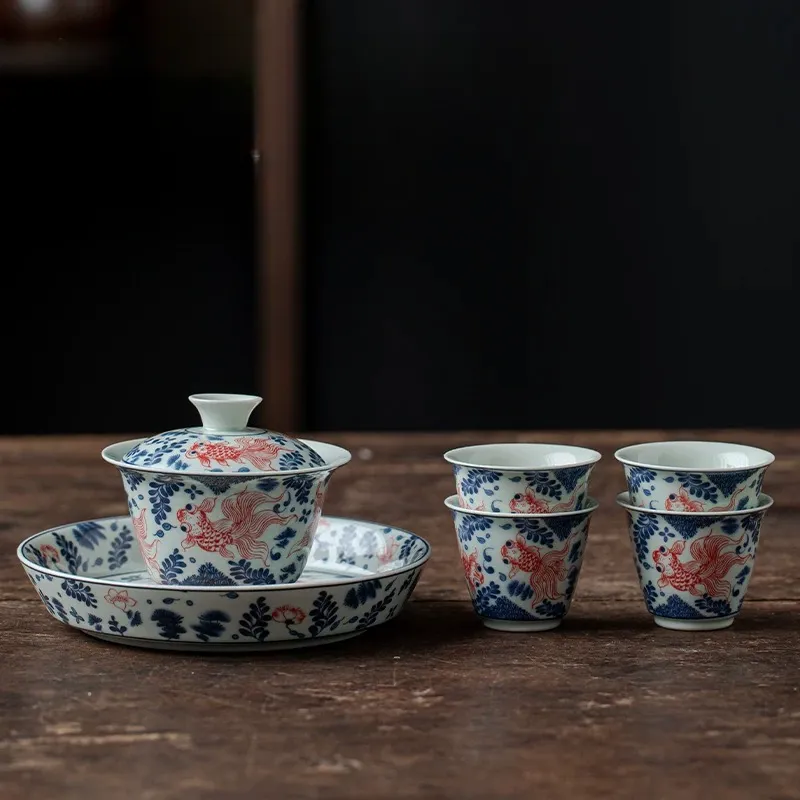
Ceramic gaiwans, especially white porcelain ones, are the most commonly used style in teahouses and the first pick for 90% of gongfu tea beginners.
Key Advantages:
- The dense body does not absorb or mix flavors at all, and fully brings out the natural aroma and taste of tea leaves. It is known as the most objective material for presenting true tea flavor.
- The smooth glazed surface does not trap tea stains. It can be easily cleaned with warm water after brewing and requires almost no special maintenance.
- Ceramic gaiwans made with underglaze color have pigments sealed under the glaze, making them safe with no harmful leaching. They also have an elegant appearance and fit all kinds of occasions.
Minor Drawback:
Medium heat retention. Tea cools a little faster compared with Yixing clay, but this has almost no impact on the quick infusion style of gongfu tea.
Ideal Users:
Gongfu tea beginners, tea lovers who enjoy trying different types of tea, and anyone who values the original flavor of tea.
Suitable Teas:
All types of tea, especially green tea, white tea, black tea, highly fragrant oolong and other teas that demand high aroma clarity.
Yixing Clay Gaiwan: An Advanced Choice for Seasoned Tea Drinkers

Yixing clay gaiwans are a classic in Chinese tea culture. They are hand-fired from raw ore Yixing clay and carry a unique cultural texture and collectible value.
Key Advantages:
- Yixing clay has a natural double pore structure that is breathable without over-steeping the tea. It softens the tea mouthfeel and better brings out the rich aroma and sweetness of aged and fermented teas.
- Great heat retention keeps the temperature stable so tea leaves can fully release their contents.
- When used regularly for only one type of tea, the clay slowly absorbs tea aroma and develops a smooth patina over time. It becomes more appealing with use and makes smoother tasting tea.
Minor Drawbacks:
- Slightly absorbent, so you must never switch between different teas frequently. One gaiwan for one type of tea is a must to avoid flavor mixing.
- High quality raw ore Yixing clay is expensive, and handmade pieces have a low success rate. Beginners often struggle to judge the quality of the clay.
- It requires regular cleaning and care.
Ideal Users:
Experienced tea drinkers who stick to one type of tea, especially fermented or aged teas, and those who enjoy nurturing their tea ware and prefer a rich, mellow taste.
Suitable Teas:
Wuyi rock tea, ripe Pu-erh, aged white tea, black tea and other highly fermented or aged teas.
High Borosilicate Glass Gaiwan: Best for Watching Leaves Unfold and Enjoying Flavor

High borosilicate glass gaiwans have grown increasingly popular in recent years and have won many tea lovers over with their attractive looks and practicality.
Key Advantages:
- The transparent body lets you fully watch how tea leaves unfurl in water and how the tea liquor changes color. The brewing process itself is a delight.
- Made of food grade high borosilicate glass, it resists high temperatures and sudden temperature changes. It will not crack even if you pour boiling water directly, making it very safe.
- It does not absorb or mix flavors at all, is easy to clean and affordable.
Minor Drawbacks:
- The lowest heat retention among the three materials, so tea cools down relatively fast.
- High thermal conductivity means a higher risk of burning your hands if the body has no anti scald design.
Ideal Users:
Tea lovers who enjoy observing tea leaves, people who often drink fresh and light teas, and style focused beginners.
Suitable Teas:
Green tea, yellow tea, fresh white tea, herbal tea and other teas where you want to watch the leaves and appreciate the visual appeal.
One Sentence Summary for Beginners
Choose ceramic if you want to try many different kinds of tea. Choose Yixing clay if you stick to one highly fermented or aged tea and want a richer, mellower taste. Choose high borosilicate glass if you love watching leaves unfurl and often drink green tea or fresh white tea.
Gaiwan Shape Selection: Tips for Beginners to Avoid Burns and Pour Smoothly

Many new tea drinkers assume that burning their hands with a gaiwan is just a matter of poor technique. In reality, about 80% of issues with heat burns and messy pouring come from choosing the wrong shape. A well-designed gaiwan can be used easily even by complete beginners, allowing for comfortable, burn-free handling and smooth, spill-free pouring.
Below we have put together the essential shape standards for beginner-friendly gaiwans, as well as common mistakes to avoid. Follow these guidelines and you will pick the right one with no missteps.
Key Shape Standards for Smooth Pouring and Burn Prevention
1.The rim must flare outward and be wide enough
This is the most important design for heat protection. A flared rim keeps your fingers safely away from the hot bowl body and tea while gripping, preventing burns at the source. Choose models with a flared rim of at least 3mm wide. Avoid gaiwans with flat or inward-curving rims.
2.Choose a slightly tapered body, not a straight cylinder
A high-quality gaiwan has a curved shape: wide opening, slightly narrowed waist, and stable base. This design offers better balance, prevents slipping while pouring, and keeps the water flow focused without splashing. Straight cylinder gaiwans are slippery to hold and create scattered, messy pours that are hard for beginners to control.
3.The lid knob should be tall, preferably hollow
The knob is the raised part on top of the lid where you press down while brewing. Always choose a gaiwan with a tall, hollow knob. This design keeps your fingers away from the hot lid surface and avoids burns. Never pick gaiwans with short, flat knobs that are almost level with the lid—your fingers will easily touch the scalding surface, making every brew feel unpredictable.
4.The lid should fit the bowl just right
A good gaiwan has a lid that fits neither too loose nor too tight. A loose lid wobbles while pouring and causes spills. A tight lid makes it hard to adjust the pouring gap and can even get stuck. The ideal fit lets the lid spin smoothly and lets you easily adjust the gap for pouring, with a high margin for error.
Shape Mistakes Beginners Must Avoid
Gaiwans with an extremely thin body:
Thin porcelain conducts heat extremely fast. Even with a flared rim, they burn hands easily and are not recommended for beginners.
Overly large or heavy gaiwans:
When full, they are too heavy for beginners to hold with one hand, increasing the risk of burns and drops.
Gaiwans with complex carvings or uneven surfaces:
These designs trap tea stains in crevices, making cleaning difficult. The textures also disrupt heat distribution and raise the risk of burns.
If you are an absolute beginner, you can also choose a gaiwan with a built-in spout. This type has a fixed pouring lip for smoother pouring, is more forgiving than a traditional three-piece gaiwan, and is much easier to learn.

推荐产品
Hand-Painted Sassy Cat Ceramic Tea Pet
Handmade Yixing Raw Ore Purple Clay Gaiwan 150ml
Handmade Jade White Porcelain Gaiwan 100ml
Handmade Unglazed Coarse Pottery Old Rock Clay Gaiwan 80ml
Jingdezhen Mei Leaf Gaiwan Red Blossom 160ml
Jingdezhen Hand-Painted Blue and White Porcelain Gaiwan 180 ml
Bamboo Green Glass Gaiwan Kung Fu Tea Set 120ml
Yixing Purple Clay Gongfu Gaiwan 210ml
Jingdezhen Straw Ash Glazed Gaiwan with Spout 130ml
Jingdezhen Glazed Porcelain Gaiwan 160ml
Portable Travel Gaiwan Tea Set 1 Gaiwan 3 Tea Cups
Celadon Gaiwan with Tea Strainer Infuser 110ml