

Unlike regular teapots, Yixing clay teapots enhance tea brewing results and elevate the taste of the tea liquor. However, many new tea enthusiasts are not yet familiar with using Yixing clay teapots. To address this, we have compiled a detailed guide to using Yixing clay teapots, providing you with a complete brewing process.
Step 1: Preparation Before Brewing
Before brewing, you need to gather the required tools. We have listed essential items and optional accessories for you to prepare based on your needs.
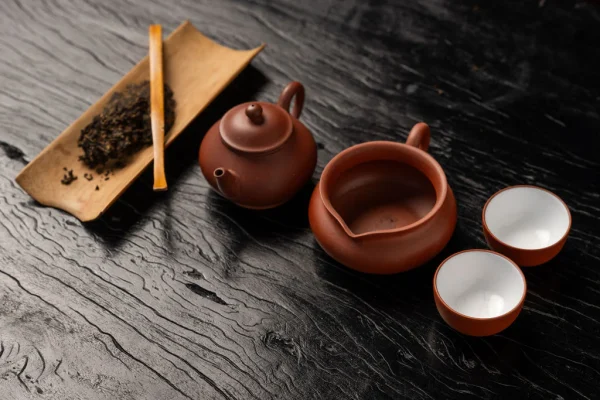
Essential Tools:
- Yixing clay teapot
- Fairness pitcher
- Tasting cups
- High-quality loose leaf tea
- Hot water (or a kettle)
Optional Accessories:
- Tea tray (to catch excess water)
- Tea boat (to maintain teapot temperature)
- Tea needle (to unclog the spout)
- Lint-free tea towel (for drying)
- Waste water bowl
- Tea scoop (for measuring tea leaves)
Tip:For a 150ml teapot, prepare approximately 5-7 grams of tea leaves (about 1 tablespoon). You can adjust the amount according to your preferred taste intensity.
Step 2: Tea Rinsing and Teapot Warming
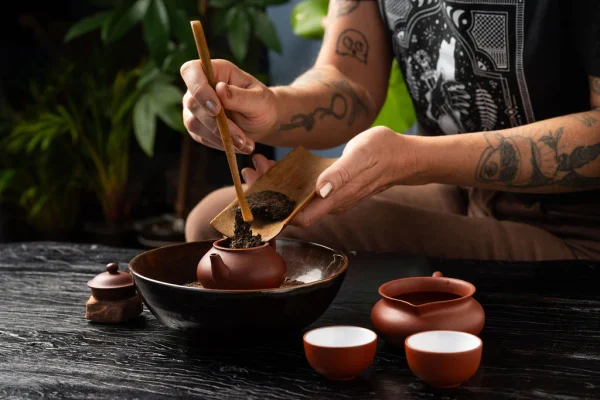
Warm the teapot and utensils:
Pour boiling water (95-100℃/203-212℉) into the Yixing clay teapot, then transfer it to the fairness pitcher and tasting cups. Gently swirl the water in each cup to ensure even heating, then discard the water. This step prevents the tea leaves from being shocked by sudden temperature changes, ensuring stable brewing temperature and preserving the tea’s flavor.
Measure and add the tea leaves:
Place the measured tea leaves into the pre-warmed teapot and cover the lid. Let the steam soften the leaves and release their aroma. For tightly rolled teas (such as Tieguanyin) or aged Pu-erh, gently shake the teapot to distribute the leaves evenly.
Awaken the tea (Rinse if necessary):
Cover the teapot and let the residual heat awaken the tea leaves for 30 seconds—this releases their initial aroma. For compressed teas (such as Pu-erh cakes) or heavily fermented oolong teas, a quick rinse is optional: pour hot water over the leaves, cover briefly (for 5-10 seconds), and discard the rinse water. This step loosens tightly packed leaves and washes away any residual dust from the processing.
Savor the pre-brew aroma:
Lift the lid and take a deep breath to enjoy the refreshing tea aroma.
Step 3: Brewing Tea with the Yixing Teapot
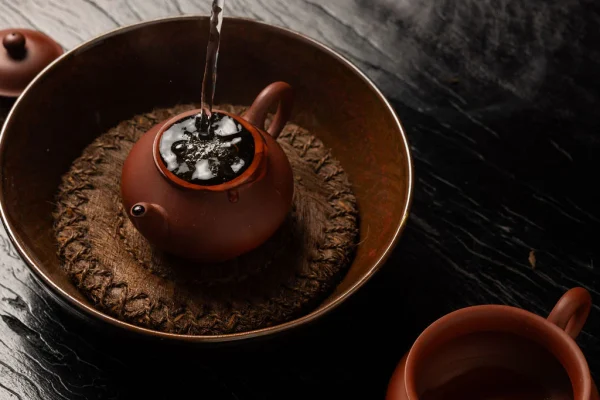
Yixing clay teapots excel at extracting the multi-layered flavors of tea, but this requires precise control of brewing time and water temperature. Unlike regular teapots, Yixing teapots have excellent heat retention, so you need to adjust the brewing time accordingly to avoid over-extraction.
1.Pour water for brewing: Slowly pour hot water along the inner wall of the teapot (avoid pouring directly onto the tea leaves) to minimize agitation. Fill the teapot completely.
2.Control brewing time: Cover the teapot and steep according to the tea type (refer to the chart below). The first infusion should be shorter—this allows the leaves to unfurl without making the tea liquor bitter.
| Tea Type | First Infusion | Subsequent Infusions | Water Temperature |
|---|---|---|---|
| Oolong (Da Hong Pao) | 30–45 seconds | increase by 15–20 seconds | 95–100℃ / 203–212℉ |
| Pu-erh (Aged) | 45–60 seconds | increase by 20–30 seconds | 95–100℃ / 203–212℉ |
| Raw Pu-erh | 20–30 seconds | increase by 10–15 seconds | 90–95℃ / 194–203℉ |
| Tieguanyin | 25–35 seconds | increase by 10–20 seconds | 95℃ / 203℉ |
3.Maintain temperature (for bold teas): For teas that thrive on high heat (such as aged Pu-erh or strong-scented oolong teas), pour hot water over the outside of the teapot using a tea boat. This keeps the clay warm, ensuring consistent flavor extraction across multiple infusions.
Step 4: Savor and Repeat
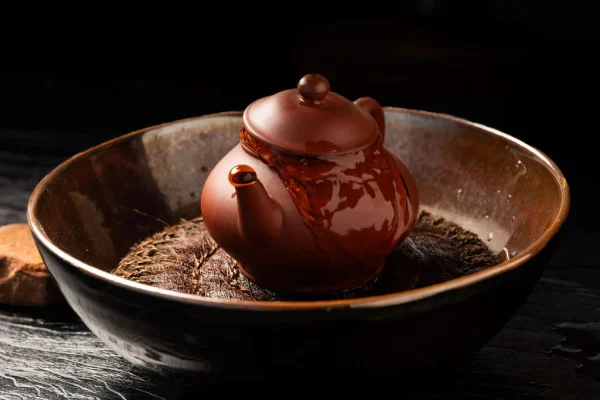
Savor mindfully:
Now you can savor the tea’s flavor. Let the tea liquor linger in your mouth for a moment, and use your tongue to experience its multi-layered flavors—sweetness, umami, and richness.
Repeat brewing and adjust:
After the first infusion, refill the teapot with hot water and brew according to the schedule provided above. Observe how the tea liquor changes with each infusion and pay attention to the evolving flavors.
Learning to brew tea with a Yixing teapot through videos
Frequently Asked Questions (FAQ)
Q: What types of tea are Yixing clay teapots suitable for?
A: They are suitable for highly fermented teas or those that need to highlight a rich flavor, such as oolong tea, Pu-erh tea, and black tea. The porous nature of Yixing clay can absorb tea flavors and soften the taste. They are not suitable for teas that emphasize freshness, like green tea and white tea, to avoid flavor contamination.
Q: How much tea should I put in a 150ml Yixing clay teapot?
A: It is recommended to put 5-7 grams of tea leaves (about 1 tablespoon), accounting for 1/5 to 1/4 of the teapot’s capacity. You can adjust according to your taste: add more for stronger tea and less for lighter tea. The key is to maintain a balanced ratio of tea to water to avoid over-strong or weak taste.
Q: How to control the water temperature when brewing different teas with an Yixing clay teapot?
A: Use boiling water at 95-100℃ for oolong tea and aged Pu-erh tea; 90-95℃ for raw Pu-erh tea; and a lower temperature for lightly fermented teas. Yixing clay has strong heat retention, so excessively high water temperature can make the tea bitter. Controlling the temperature according to the tea type ensures the best taste.
Q: Can I clean an Yixing clay teapot with detergent?
A: No. Detergent will damage the teapot’s patina and leave chemical residues that affect the tea flavor. After brewing, rinse the inside and outside of the teapot with hot water, wipe it dry with a tea towel, and a natural warm patina will form with long-term use.
Q: Can one Yixing clay teapot be used to brew multiple types of tea?
A: It is not recommended. Yixing clay is highly absorbent and will accumulate flavors if used for one type of tea long-term, leading to flavor contamination when switching teas. It is better to use one teapot for one category of tea, such as exclusively for Pu-erh or oolong, to ensure a pure taste without mixed flavors.
Q: Do new Yixing clay teapots need seasoning? How to do it?
A: Yes. First, rinse the inside and surface of the teapot with warm water to remove dust. Then soak it in strong tea for 6-8 hours, discard the tea, and rinse thoroughly with hot water. Seasoning activates the teapot’s breathability, facilitating subsequent patina development and flavor release.
Q: Why does the tea become bitter after brewing with an Yixing clay teapot?
A: It is most likely due to over-steeping or using too much tea. Yixing clay has strong heat retention and fast extraction speed. For the first infusion, steep for 30-60 seconds and extend gradually with each subsequent infusion. Do not use more than 1/4 of the teapot’s capacity for tea leaves to avoid bitterness.
Q: Do I need to block the air hole on the lid of an Yixing clay teapot when brewing?
A: No. The air hole balances the air pressure inside the teapot, allowing smooth tea pouring and preventing the lid from falling off due to excessive pressure. Blocking it will affect pouring speed and may result in a stuffy taste with incomplete aroma release.
Q: How many times can tea be brewed with an Yixing clay teapot?
A: High quality tea leaves paired with an Yixing clay teapot can be brewed 5-10 times or more. The best flavor is in the first 3-5 infusions. For subsequent infusions, extend the steeping time by 10-20 seconds each time. The exact number depends on the tea quality and brewing skills.

推荐产品
Hand-Painted Sassy Cat Ceramic Tea Pet
Handmade Yixing Raw Ore Purple Clay Gaiwan 150ml
Handmade Jade White Porcelain Gaiwan 100ml
Handmade Unglazed Coarse Pottery Old Rock Clay Gaiwan 80ml
Jingdezhen Mei Leaf Gaiwan Red Blossom 160ml
Jingdezhen Hand-Painted Blue and White Porcelain Gaiwan 180 ml
Bamboo Green Glass Gaiwan Kung Fu Tea Set 120ml
Yixing Purple Clay Gongfu Gaiwan 210ml
Jingdezhen Straw Ash Glazed Gaiwan with Spout 130ml
Jingdezhen Glazed Porcelain Gaiwan 160ml
Portable Travel Gaiwan Tea Set 1 Gaiwan 3 Tea Cups
Celadon Gaiwan with Tea Strainer Infuser 110ml